MENTOR MENTEE ORIENTATION PROGRAMME
Date and Time 09/6/2026, 3:30 PM
Organized by Unarvu Counselling Centre IQAC
Target participants Faculty Members of Assabah
Venue Conference Hall
Resource person Ms.Afeefa MK Psychologist Unarvu Counselling Centre
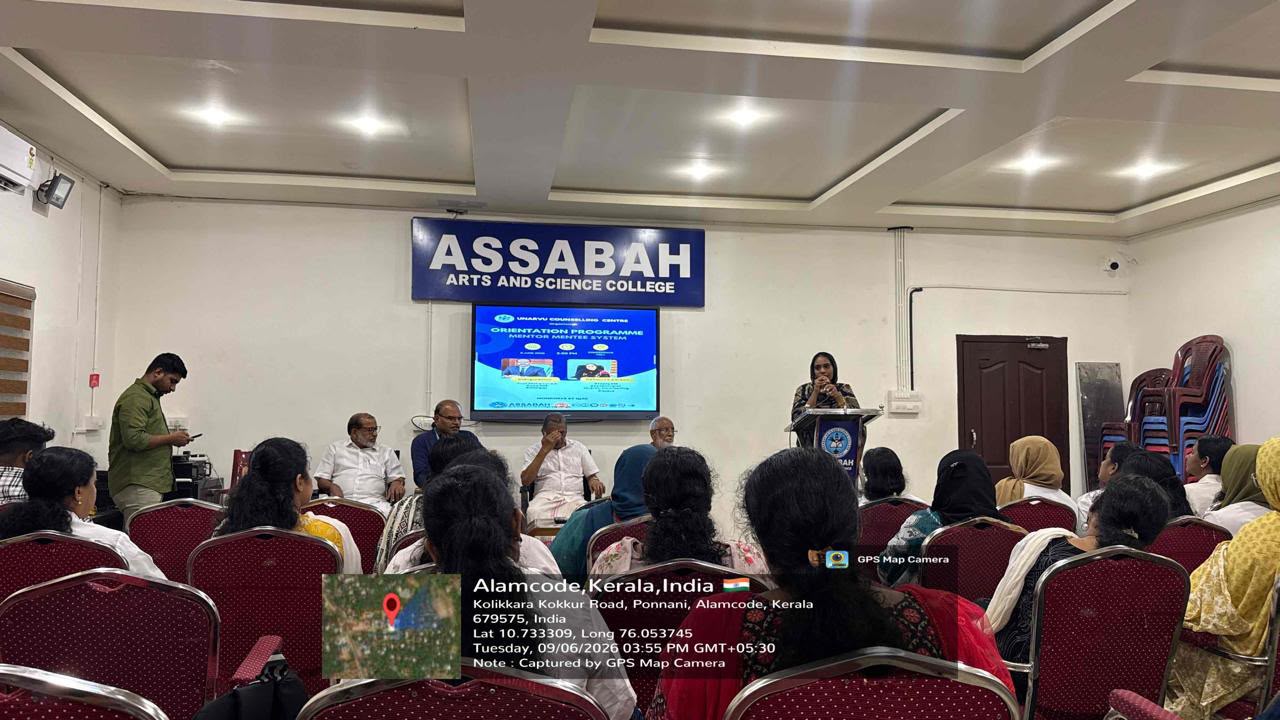
The Unarvu Counselling Centre of Assabah Arts and Science College Valayamkulam organized a Mentor–Mentee Orientation Programme for faculty members on 9 June 2026 at 3:30 PM in the College Conference Hall. The programme was conducted with the aim of creating awareness among faculty members about the Mentor–Mentee system and its importance in providing effective guidance and support to students. The session focused on strengthening the mentoring process for the academic, personal, and overall development of students
The programme commenced with a welcome address by the College President, Mr. Ashraf. Mr. Kunhahamed K, Management Committee Member, and Mr. Mohamed Uni Haji, General Secretary, participated in the programme. The programme was formally inaugurated by Prof. Mohammed Koya M.N., Principal of the College.
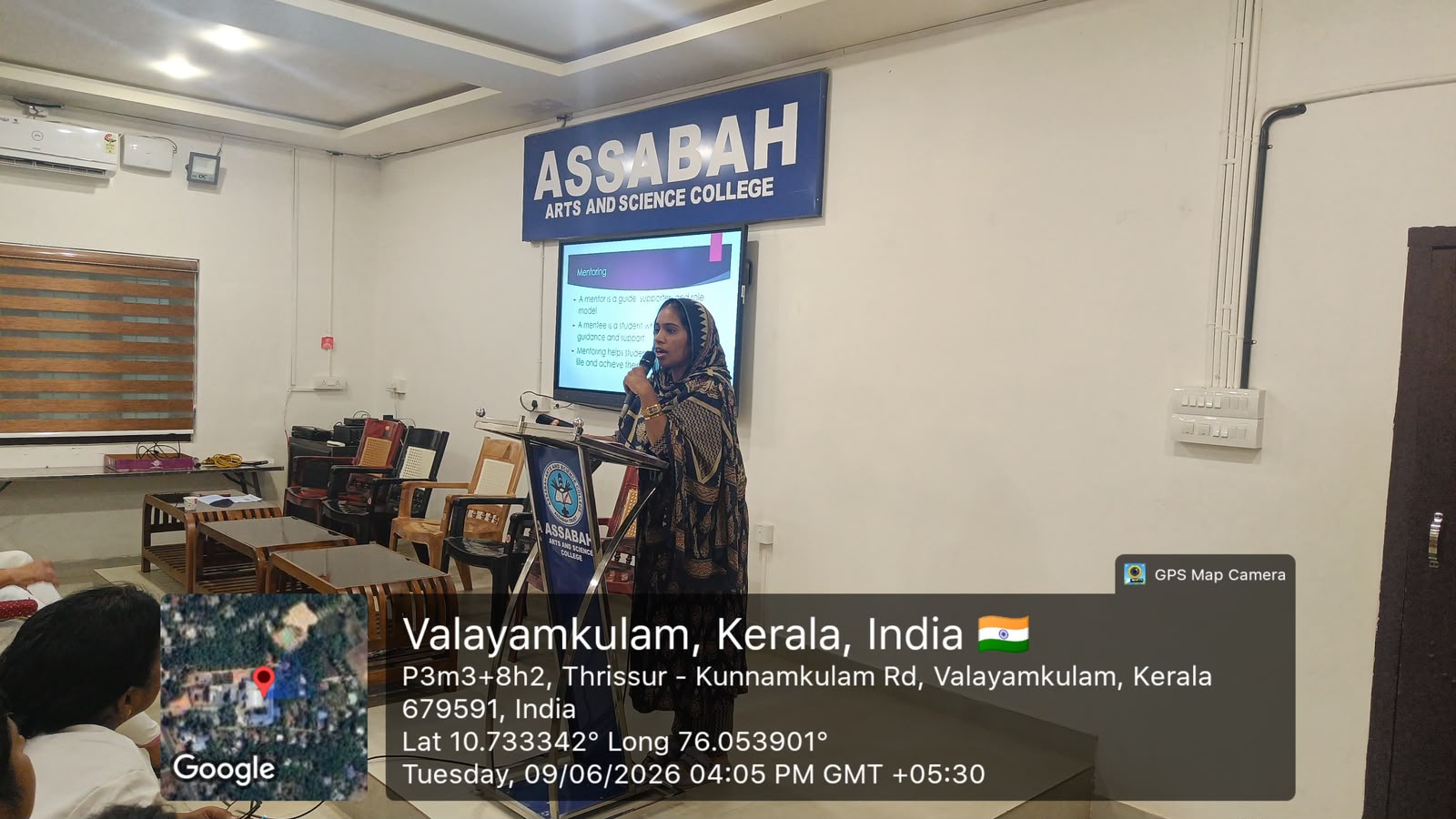
The orientation session was facilitated by Ms. Afeefa M.K., Psychologist, Unarvu Counselling Centre. The session provided a detailed overview of the Mentor–Mentee system, including its objectives, procedures, and the responsibilities of faculty mentors. The importance of continuous support, proper communication, and timely guidance in helping students overcome academic and personal challenges was highlighted.
The programme concluded with a vote of thanks proposed by Mr. Baiju, Vice Principal. The session was informative and beneficial for faculty members in understanding and implementing an effective Mentor–Mentee system in the college.
The programme commenced with a welcome address by the College President, Mr. Ashraf. Mr. Kunhahamed K, Management Committee Member, and Mr. Mohamed Uni Haji, General Secretary, participated in the programme. The programme was formally inaugurated by Prof. Mohammed Koya M.N., Principal of the College.
The orientation session was facilitated by Ms. Afeefa M.K., Psychologist, Unarvu Counselling Centre. The session provided a detailed overview of the Mentor–Mentee system, including its objectives, procedures, and the responsibilities of faculty mentors. The importance of continuous support, proper communication, and timely guidance in helping students overcome academic and personal challenges was highlighted.
The programme concluded with a vote of thanks proposed by Mr. Baiju, Vice Principal. The session was informative and beneficial for faculty members in understanding and implementing an effective Mentor–Mentee system in the college.
Objectives
To create awareness among faculty members about the Mentor–Mentee system and its significance.
* To familiarize mentors with their roles and responsibilities in guiding students.
* To enhance effective communication and supportive relationships between mentors and mentees.
* To provide guidance on addressing students’ academic, personal, and emotional needs.
* To strengthen the mentoring system for the overall development and well-being of students.
* To familiarize mentors with their roles and responsibilities in guiding students.
* To enhance effective communication and supportive relationships between mentors and mentees.
* To provide guidance on addressing students’ academic, personal, and emotional needs.
* To strengthen the mentoring system for the overall development and well-being of students.
Conclusion
The Mentor–Mentee Orientation Programme successfully created awareness among faculty members regarding the importance of mentoring and student support systems. The programme helped faculty members gain better understanding of their role as mentors and encouraged them to contribute towards the academic success, personal growth, and overall development of students.
.jpeg)